
Event Overview
“Last-Mile Mobility Workation Program”
On January 17–18, 2026, in Tateyama City, Chiba Prefecture, I had the opportunity to participate as a tour guide in the
“Tateyama Last-Mile Mobility Workation Program.”
This program focuses on the concept of the “last mile,” meaning the final segment of local transportation, and involves touring Tateyama City using various forms of mobility such as electric tuk-tuks, EV bikes, electric scooters, and electric-assist bicycles.
Through fieldwork, workshops, and交流 with local businesses, participants learned how to identify regional challenges, generate ideas, and develop project concepts—while experientially exploring the possibilities of workation and secondary transportation systems.
Participation in the program was free of charge (accommodation, meals, and insurance were covered by the organizers), and over the course of two days, participants from urban areas engaged with local residents while deepening ideas connected to the future of the region.
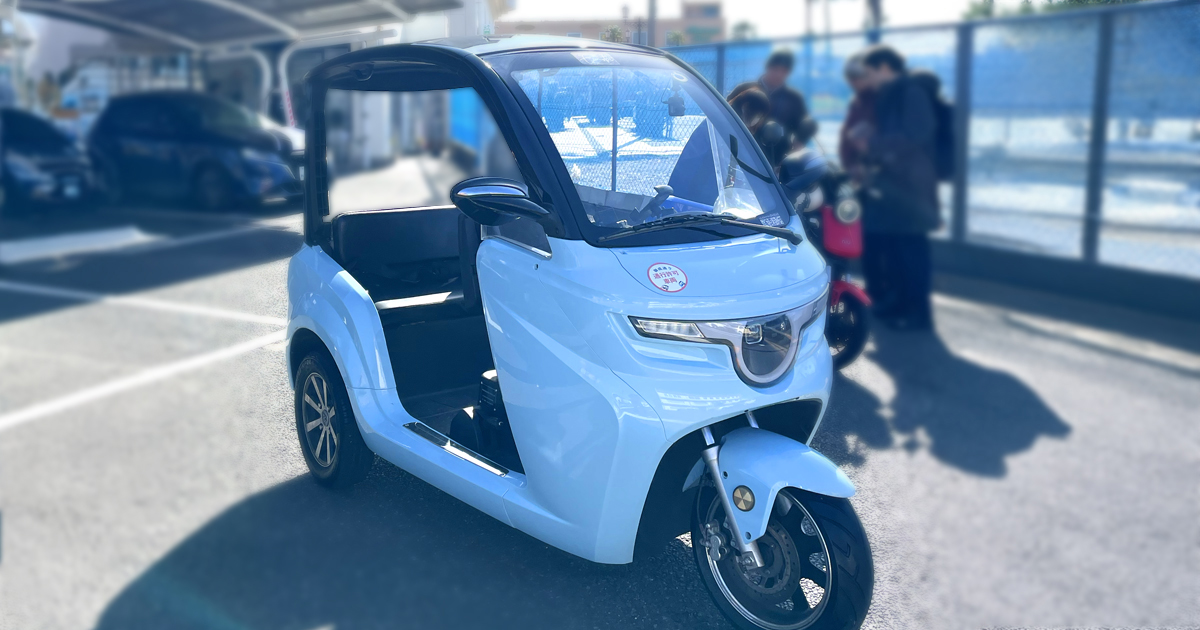
What Is an Electric Tuk-Tuk?

In this program, I was in charge of guiding the tour using an electric tuk-tuk.
This vehicle can be handled like a small motorbike and accommodates up to three passengers while driving on public roads.
It reaches a top speed of about 45 km/h on flat roads and can travel approximately 40 km on a full charge.
Before the tour, we reviewed a simple operation guide via video and conducted test drives on site.
The operation was extremely simple—anyone with a valid driver’s license could drive it comfortably.
Riding the Electric Tuk-Tuk
Ride comfort may vary by person, but the vehicle definitely transmits the bumps and unevenness of the road directly—it shakes quite a lot.
However, that shaking, combined with its compact size and the openness of feeling the wind directly, created a sense of excitement similar to a theme park attraction.
What participants especially appreciated was the ability to share the travel time itself in a much smaller space than a car.
Sharing conversations and experiences naturally brought people closer together.
In fact, thanks in part to this vehicle, I personally felt that the emotional distance between myself and the participants quickly shortened, and I was able to spend a truly enjoyable time with everyone.
About the Tour Route
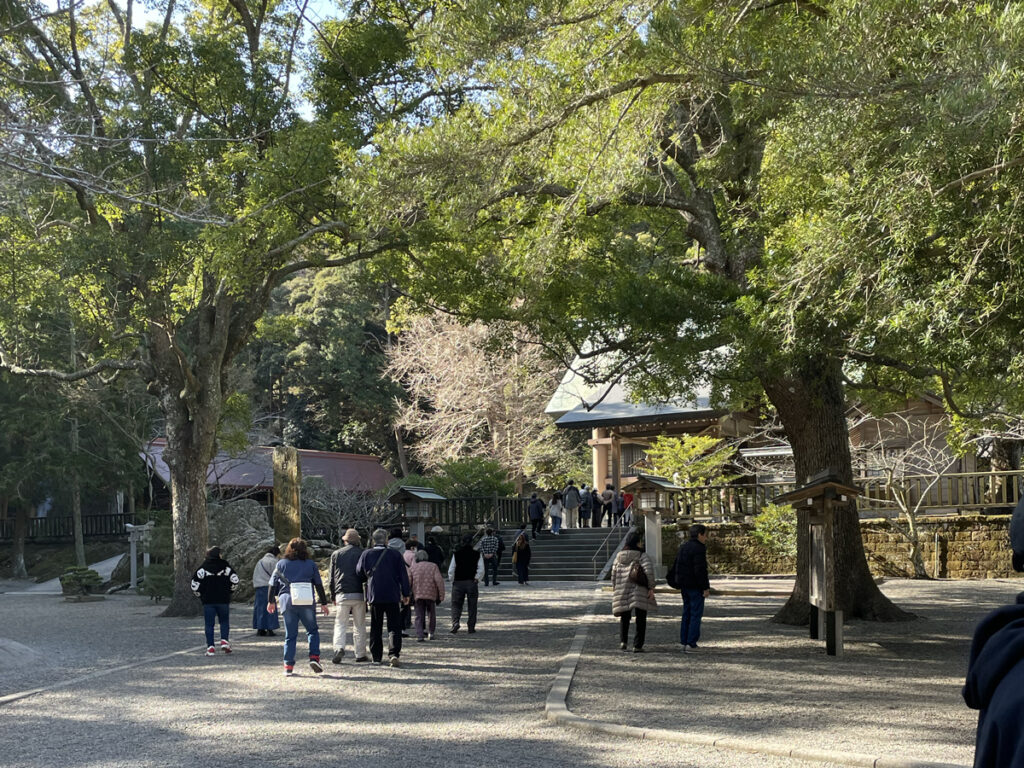
This time, our main destination was the powerful spiritual site Awa Shrine, often referred to as one of Chiba’s “Three Major Fortune Shrines,”
and we guided participants around the surrounding areas based on their preferences.
Visited locations:
- Awa Shrine
- Yoshida Rice Shop
- Tomisaki Bakery
- Aihama Fishing Port
- Sato Banana
- ODOYA (local supermarket)
Awa Shrine
Awa Shrine is known as a shrine that enshrines deities of industry and business prosperity, believed to bring blessings for business success and financial fortune.
Many business leaders visit this shrine, and on this day as well, long lines of worshippers had formed.
The majestic ginkgo tree and the sacred maki tree (considered divine trees) allow visitors to feel a powerful, sacred plant energy.
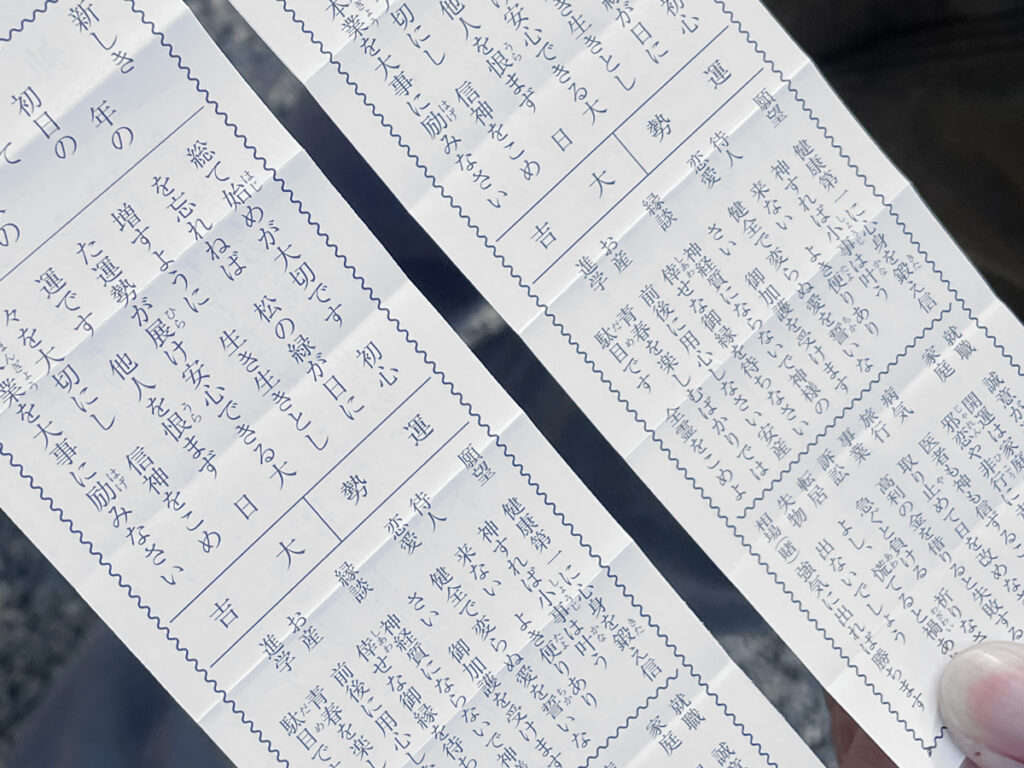
One participant drew two “Great Blessing” fortunes in a row, and I was lucky enough to share in that good fortune.
Yoshida Rice Shop
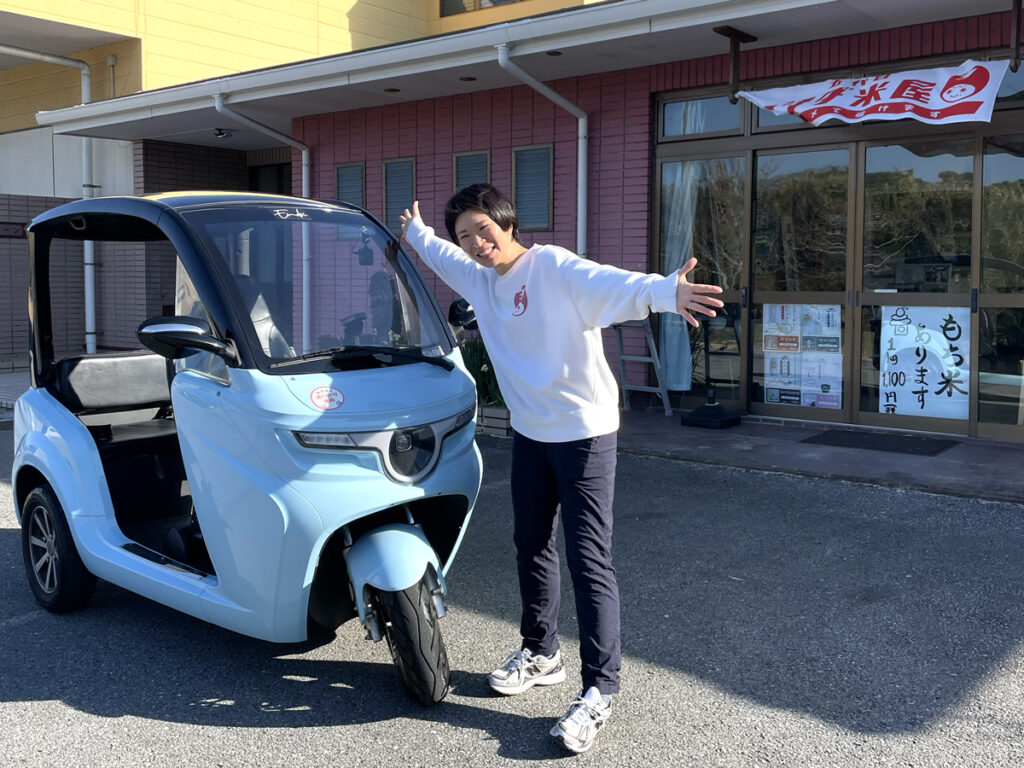
A famous rice shop that has been run by the same family for five generations.
Here, we enjoyed their signature amazake (sweet fermented rice drink).
A participant shared that amazake is traditionally considered a summer seasonal drink, originally consumed to prevent summer fatigue, and is often called a “drinkable IV drip” due to its high nutritional value.
It was very educational.
The always cheerful and energetic fifth-generation proprietress is also one of the shop’s charms.
Thank you very much.
Tomisaki Bakery
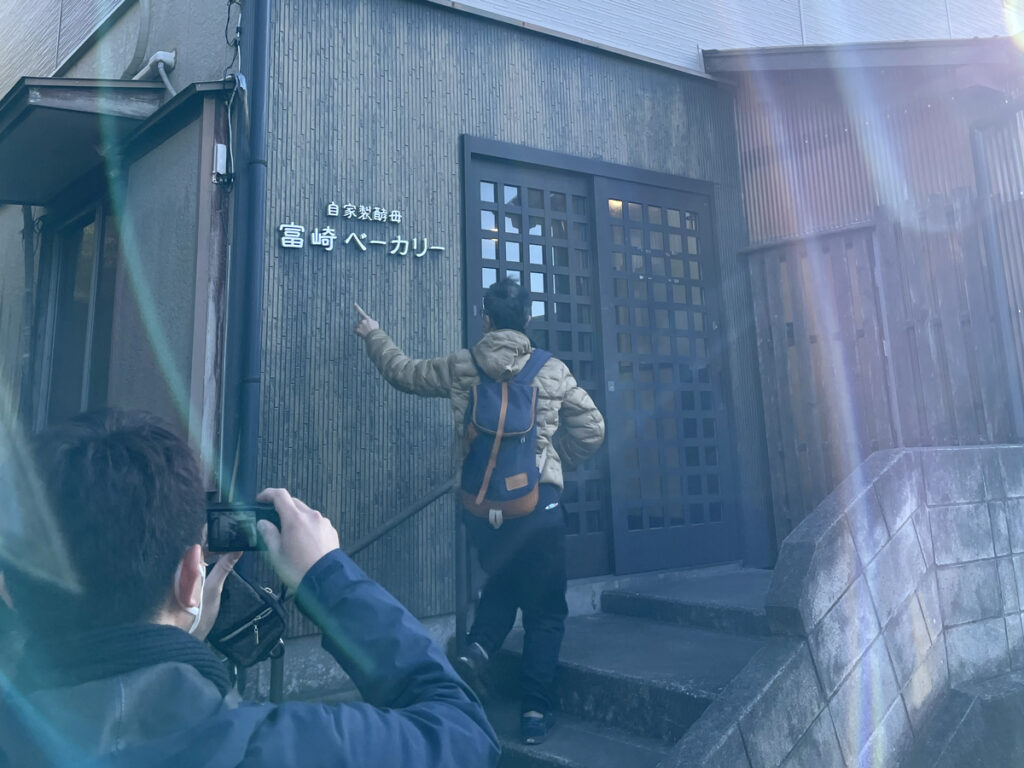
A hidden bakery tucked away in a back alley—difficult to reach even for locals, and almost impossible for visitors from outside the prefecture.
The journey itself is part of the experience.
With a wide variety of breads, choosing is half the fun, and it’s also perfect for souvenirs.
Aihama Fishing Port
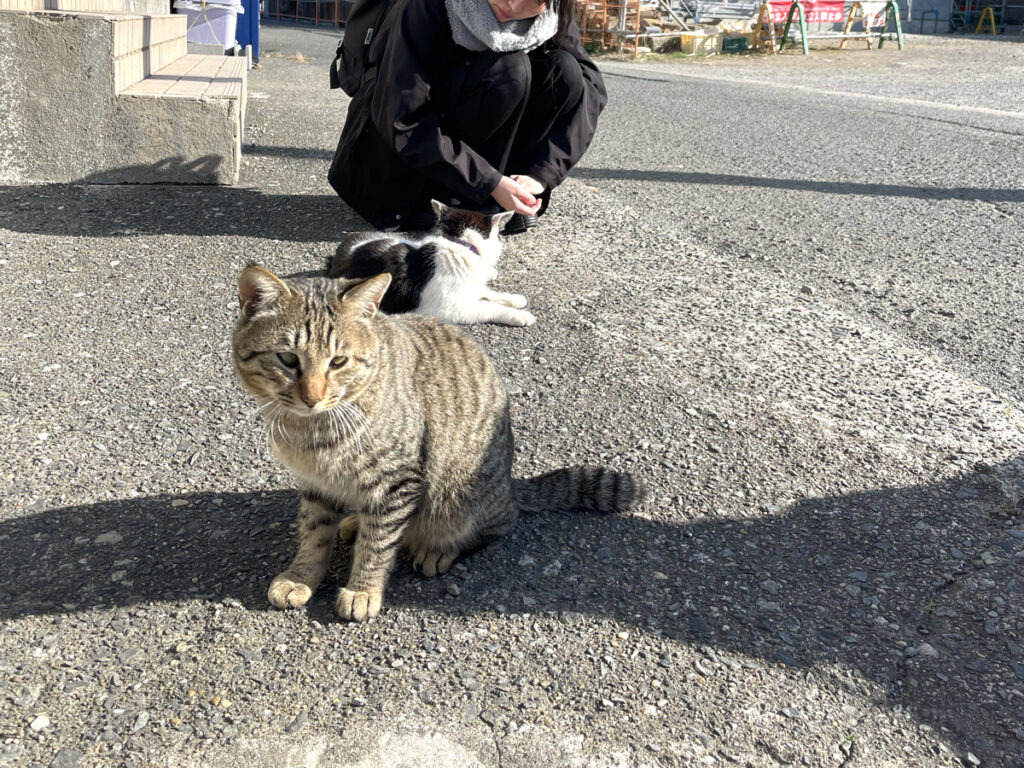
We had originally planned to visit the nearby café “Kumo,” but it was unfortunately closed, so we took a walk around the port instead.
Many cats gather at the fishing port, attracted by fish caught by anglers.
When one cat approached us, it naturally turned into a photo session.
Before we knew it, we were surrounded by cats—and for the cat-loving participants, this spot became the most memorable part of the tour.
Sato Banana
A well-known banana wholesaler in Tateyama.
For over 90 years, they have specialized in sourcing, storing, and managing bananas, selling them in consistently optimal condition.
When I mentioned that there was a banana specialty shop in Tateyama, participants became curious, so we included it in the tour.
ODOYA
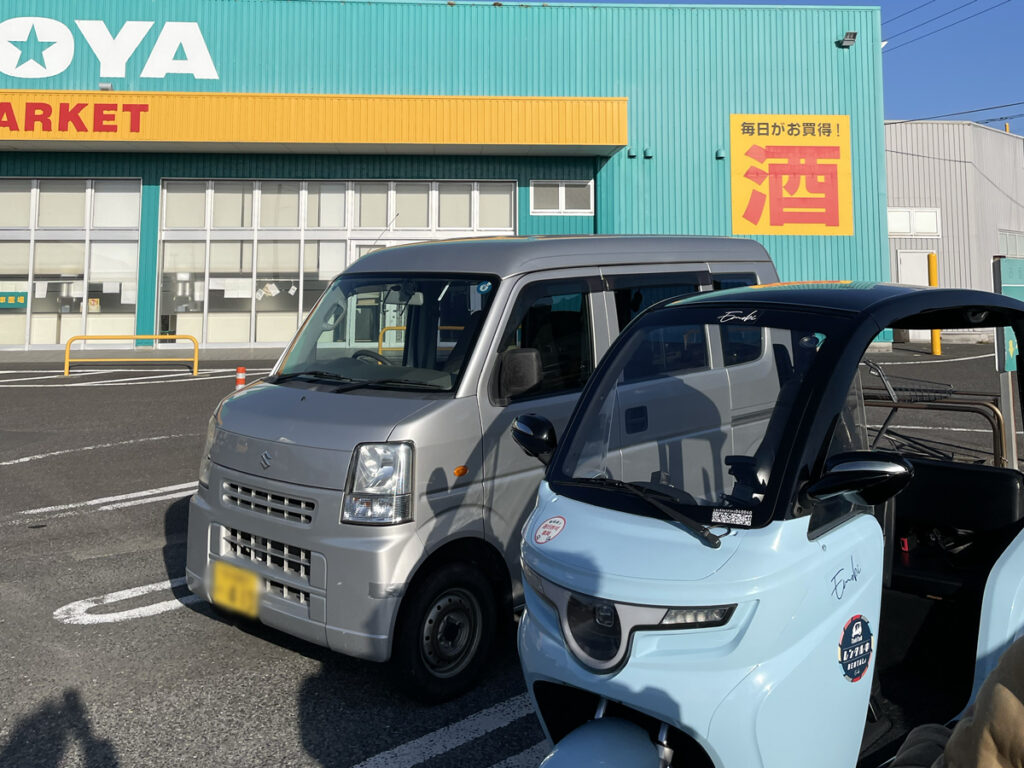
At the request of participants who wanted to see a local supermarket, we visited ODOYA.
In the Awa region, there are local supermarkets such as Odoya, Owariya, and Tokiwaya.
For locals, these are completely ordinary everyday stores—but seeing how much joy and interest they brought to visitors was refreshing and educational for me as well.
Reflections After Two Days of Guiding
After completing two days as a tour guide, my most honest feeling is simply: it was incredibly fun.
The electric tuk-tuk mobility we used played a big role in enhancing that enjoyment.
By touring the region with people from outside the prefecture, exchanging ideas, and re-examining the area from multiple perspectives, I experienced many new discoveries and realizations.
From a designer’s perspective, I strongly felt that how this information is organized and transformed into design outputs could multiply its value many times over.
Because of my profession, I tend to spend long periods working indoors, so I found myself thinking that it would be wonderful to stay involved in tour-guiding work like this on a regular basis.


Comments